Source Drainage Trough Mold for Farmland, Roads, and Sewage
Find and compare 30 drainage trough mold options for farmland roads, railway drainage, and sewage systems. Evaluate steel construction, customizable U-shape and V-shape designs, and OEM services from verified manufacturers.
Key considerations
Products List


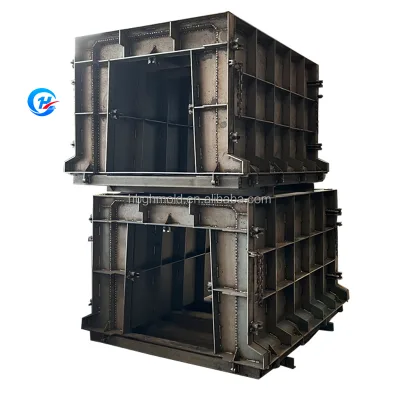
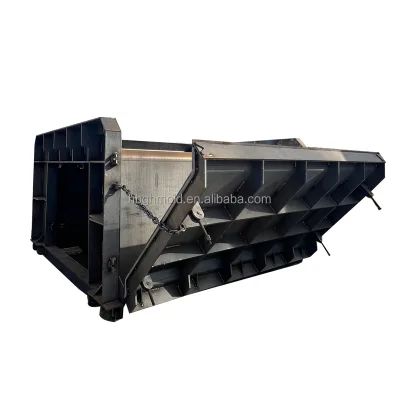
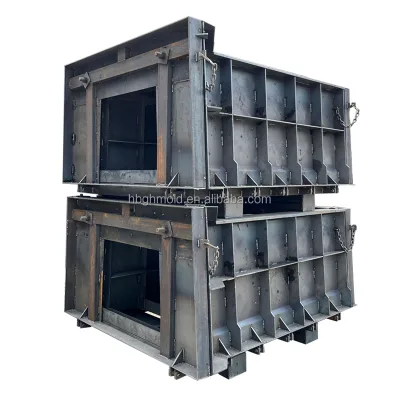
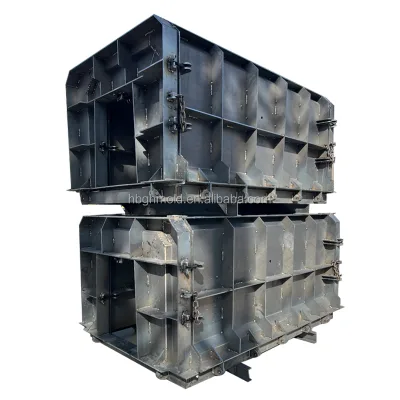
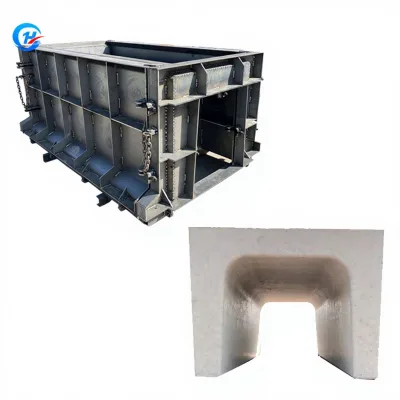
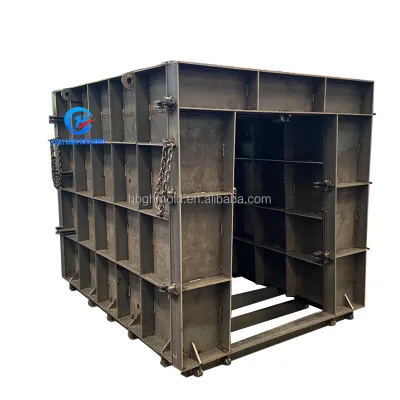
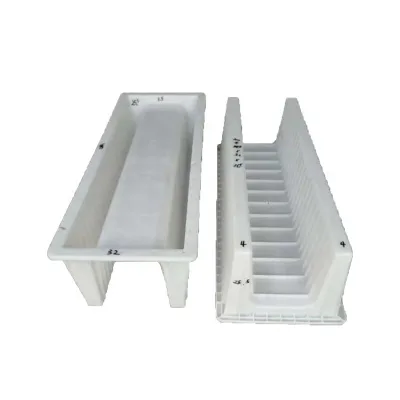
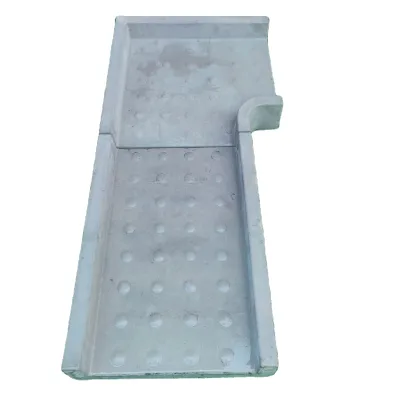


Comprehensive Sourcing Guide
Drainage Trough Mold Sourcing Guide
Procuring a drainage trough mold requires a clear distinction between the tooling itself and the final concrete product it produces. The market offers specialized steel molds designed for creating U-shape, V-shape, and rectangular drainage channels used in farmland roads, railways, and general commodity applications. Buyers must recognize that these are heavy industrial assets, often constructed from Q235B or Q345b carbon steel plates, intended for high-volume production of concrete spun piles or static cast drainage flumes.
The sourcing landscape includes suppliers offering both demountable and fixed mold types, with some featuring hydraulic opening mechanisms for complex geometries. While some listings mention specific models like the ud30 or U-type, the primary value lies in the customization capabilities regarding size, thickness, length, and angle. A successful procurement strategy hinges on verifying that the mold's structural design aligns with the intended production method, whether it involves centrifugal spinning or static casting processes.
Product Scope and Observed Listing Signals
When evaluating product listings, buyers should expect to see a wide variance in pricing, ranging from approximately 6 to 12,000 USD, which often reflects differences in mold complexity, steel grade, and customization depth. The minimum order quantity (MOQ) is similarly flexible, with observed ranges spanning from a single piece to 300 units, allowing small contractors and large manufacturers to source based on their immediate project needs. It is critical to verify the specific selling units, as some suppliers list specifications in sets or tons rather than individual mold pieces.
Product descriptions frequently highlight the condition as "New" and the material composition as steel, though some entries may ambiguously list plastic materials alongside steel specifications, requiring careful scrutiny of the material section. The observed product names often include terms like "Steel Drainage Trough Mold" or "Concrete Spun Pile Steel Mould," indicating the dual utility of these tools for different concrete forming applications. Buyers must distinguish between the mold's function as a drainage tool and its application in broader commodity or home use scenarios to ensure the selected equipment matches the intended infrastructure project.
Technical Specifications to Verify
The structural integrity of the mold depends heavily on the specific steel grade used, with Q235 and Q345b carbon steel plates being the most common materials cited in reliable listings. Buyers must confirm the mold material matches the required durability for the intended production volume, as the difference between Q235 and Q345b significantly impacts resistance to wear and deformation during repeated use. Additionally, the mold shape options, including cylindrical, tapered, or custom configurations, must align with the specific pipe diameter requirements, which can range from 300mm to 1200mm or even up to 2000mm depending on the supplier's capabilities.
Production processes vary between welded molding machines and centrifugal spinning techniques, necessitating a verification of the machining process and structure type, such as rotor type or preform mould capabilities. The trough shape, whether U-shape, V-shape, or rectangular, dictates the final drainage efficiency and must be customized to the specific angle and dimensions required by the project site. Furthermore, the mold type, whether demountable, fixed, or featuring hydraulic opening, should be selected based on the ease of concrete removal and the complexity of the drainage channel design.
Compliance and Safety Documentation
Certification status is a primary indicator of manufacturing quality, with ISO, CE, and RoHS appearing as standard compliance markers for reputable suppliers. Some listings specifically reference ISO9001 standards, which suggests a formalized quality management system, while others may list certifications with color-coded attributes that require clarification to ensure they apply to the specific mold unit. Buyers should request valid certification documents to verify that the steel molds meet international safety and environmental standards, particularly when the molds are intended for use in regulated infrastructure projects.
Quality assurance is further supported by warranty terms, with a standard 12-month warranty observed in the market for these industrial tools. This warranty coverage typically protects against manufacturing defects in the steel structure and welding integrity, providing a safety net for the buyer's investment. However, buyers must ensure that the warranty terms explicitly cover the specific mold type and customization features purchased, as standard warranties may not automatically extend to custom-sized or uniquely shaped molds without specific contractual agreements.
Cost Drivers and Commercial Terms
The final cost of a drainage trough mold is driven by the complexity of the customization, the grade of steel used, and the specific production process required. Customization factors such as size, thickness, length, and angle adjustments add significant value but also increase the unit price, which can range widely from low-cost single items to high-value industrial sets. Buyers should analyze the specification details, such as the 2-ton/set weight or single package dimensions, to understand the logistics costs associated with shipping these heavy steel components.
Commercial terms often include flexible payment methods such as Trade Assurance, PayPal, Western Union, and TT, offering security for international transactions. Delivery times are typically short, with observed lead times ranging from 7 to 15 days, which is advantageous for projects with tight schedules. However, the "Time Delivery" advantage mentioned in some listings should be verified against the specific order volume and customization requirements, as complex custom orders may extend beyond the standard window.
Supplier Qualification and Quality Control
Supplier qualification should be assessed based on their origin and service capabilities, with many manufacturers located in Hebei and Henan, China, known for their steel processing industries. The presence of OEM and ODM services indicates that suppliers are equipped to handle custom orders, but buyers must verify the supplier's capacity to maintain consistent quality across different batches. The "High Quality" claim found in listings should be substantiated by requesting references or case studies of previous projects involving similar drainage flume molds.
Quality control processes are often highlighted through the use of specific machining processes like welded molding machines and the use of metal molds for production. Buyers should inquire about the inspection protocols used before shipment, ensuring that the final product meets the "Per Customer's Requirement" standard. The packaging method, whether in containers or woven bags, also plays a role in protecting the mold during transit, and suppliers should provide detailed packing lists to confirm that the 2-ton/set specifications are accurately represented in the shipment.
Long-Term Procurement Checks
Sourcing a drainage trough mold is not a one-time transaction but a long-term partnership that requires ongoing verification of the supplier's ability to deliver on time and maintain quality. The "Advantage: Time Delivery" noted in some listings should be monitored over multiple orders to ensure consistency, especially when scaling up production for large infrastructure projects. Buyers should establish clear communication channels to address any potential issues with mold wear or dimensional accuracy that may arise after extended use.
Future procurement checks should include a review of the supplier's adaptability to changing standards and requirements, as the "Per Customer's Requirement" standard implies a high degree of flexibility. Maintaining a relationship with a supplier who offers comprehensive service, including OEM and ODM capabilities, ensures that the buyer can easily modify mold specifications for future projects without needing to source from a new vendor. Regular audits of the supplier's production process and quality control measures will help sustain the high quality and reliability expected in the drainage trough mold market.
FAQs
What materials are used for drainage trough molds?
Drainage trough molds are primarily constructed from high-strength steel plates, specifically Q235B or Q345B carbon steel. This material choice ensures durability and resistance to wear during the concrete pouring and demolding processes. The steel structure provides the necessary rigidity to maintain precise U-shape, V-shape, or rectangular profiles for agricultural and railway drainage applications.
Can drainage trough molds be customized for specific projects?
Yes, these molds are fully customized to meet specific project requirements. Buyers can adjust the size, thickness, length, and angle of the mold to fit unique drainage needs. The manufacturing process supports OEM and ODM services, allowing for tailored solutions that align with particular engineering specifications or site conditions for commodity and home use applications.
What certifications do drainage trough mold manufacturers hold?
Manufacturers typically hold ISO and CE certifications, ensuring compliance with international quality and safety standards. Some products also adhere to ISO9001 standards for quality management. These certifications verify that the production processes and final steel mold products meet rigorous industry requirements, providing buyers with confidence in the reliability and consistency of the drainage groove molds supplied.
What is the typical lead time for drainage trough molds?
The standard delivery time for drainage trough molds is generally between 7 to 15 days. This timeframe allows for efficient production and quality checks before shipping. Buyers should note that lead times may vary slightly based on the complexity of customization, such as specific dimensions or angles, and the current production schedule of the factory in China.
What warranty is provided for steel drainage trough molds?
A standard 12-month warranty is typically provided for new steel drainage trough molds. This warranty covers manufacturing defects and ensures the structural integrity of the Q235 steel construction. It reflects the high quality of the product and gives buyers assurance regarding the durability of the mold during its initial operational period in concrete spinning or static casting processes.
How are drainage trough molds packaged for shipping?
Drainage trough molds are packaged in containers to ensure safe transit. This robust packaging protects the steel structure from damage during long-distance shipping from China. The containerized approach is standard for these heavy industrial items, ensuring that the molds arrive at the destination in optimal condition, ready for immediate use in producing concrete drainage flumes for farmland or railway projects.